
Bloons Adventure Time TD
ninja kiwiStrategy
4.58.46K Reviews
- Version
- 1.7.7
- Installs
- 10.00M
- Age Rating
- Everyone
Screenshots
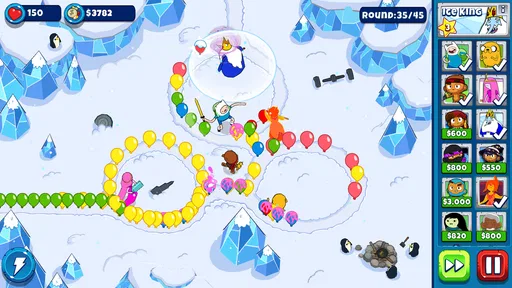
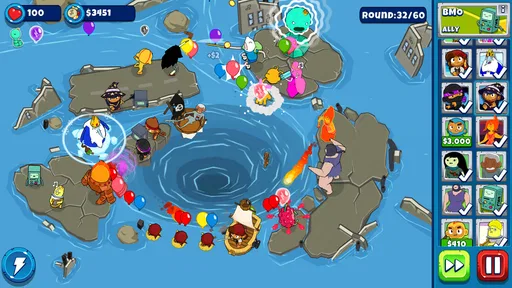
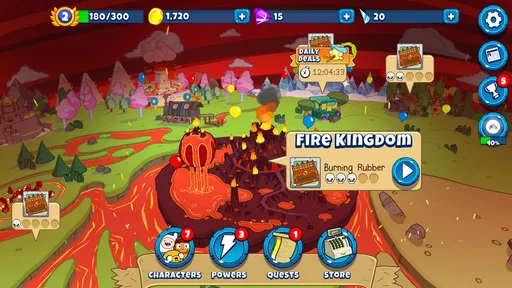
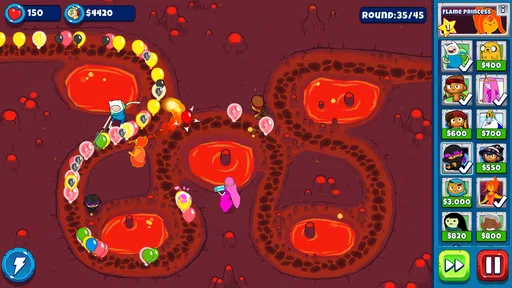
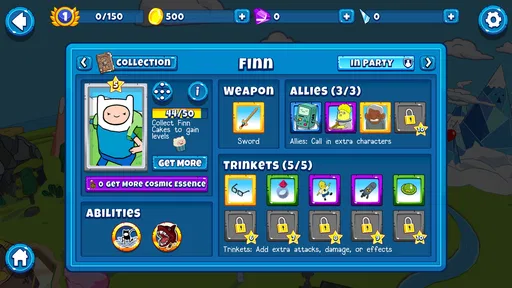
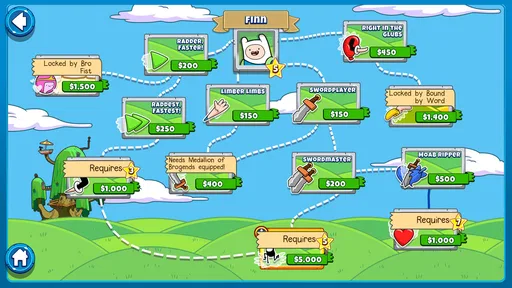
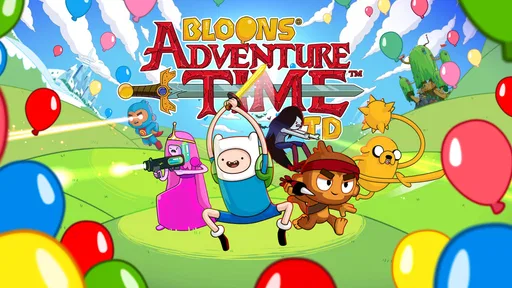
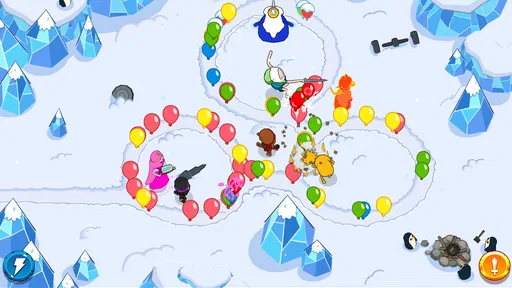
Our Review of Bloons Adventure Time TD
 Analysis by Appyee
I went into Bloons Adventure Time TD expecting a familiar tower-defense formula with a cartoon crossover wrapped around it, but I found something more distinctive than a simple reskin. The game combines ninja kiwi’s Bloons style with the world of Adventure Time, creating a strategy game that feels lighthearted on the surface while still asking me to make careful decisions about placement, upgrades, timing, and limited resources.
It is free to start, rated for Everyone, and available for Android devices running at least Android 5.0. The game has built a sizeable audience, with an average rating of 4.5 from around 99 thousand ratings and more than 10 million installs. Those figures make sense to me: it is easy to understand within a few minutes, but the later decisions are much more interesting than the bright presentation initially suggests.
What the game feels like in everyday play
The basic rhythm is straightforward. Bloons move along a route, and I place defenders to stop them before they reach the end. The Adventure Time setting gives that familiar structure a different personality, with recognizable characters and a playful visual style instead of the more traditional military or fantasy presentation found in many strategy games.
What matters is that the crossover does not completely hide the strategic core. I still need to think about attack coverage, enemy timing, upgrade priorities, and whether a short-term improvement is worth delaying a stronger setup later. A careless opening can leave me scrambling when tougher waves arrive, even though the game looks cheerful and accessible.
That balance makes it suitable for short sessions. I can play a stage while waiting for an appointment, pause after a difficult wave, and return later without needing to remember a complicated control scheme. At the same time, it has enough tactical detail to reward someone who enjoys replaying a level and testing a more efficient arrangement rather than simply completing it once.
The strongest part of the experience is how quickly it turns simple controls into meaningful choices. The game does not require complicated gestures or a large amount of text before I can begin. The challenge comes from deciding what to do with the tools in front of me, not from learning an awkward interface.
How quickly it gets moving
On a compatible device, the game is designed around an immediate pick-up-and-play loop. I do not need a long time to understand what a stage wants from me. The action is visually clear, and the tower-defense structure makes the next decision obvious even when the best answer is not.
That clarity is especially useful for casual players who may not normally choose strategy games. Someone can begin with the obvious goal of stopping the incoming Bloons, then gradually notice that positioning and upgrade order matter more than simply placing as many defenders as possible.
For experienced tower-defense players, the early stages may feel familiar rather than surprising. The appeal is less about reinventing the genre and more about seeing how the Bloons mechanics fit Adventure Time characters and presentation. If you want a completely new strategic system, this may not be the right choice. If you enjoy approachable tower defense with a strong theme, the opening hours are much easier to appreciate.
Where the decision-making becomes heavier
The game becomes more demanding during moments when several problems arrive at once: a route has a weak spot, an upgrade is overdue, and the next wave does not give much time to recover. These are the points where I stop playing automatically and start planning several moves ahead.
One useful habit is to treat the first placement as part of a larger route plan rather than as an isolated answer to the current wave. A defender that looks powerful near the entrance may be less useful than one positioned where it can influence more of the path. I also found it helpful to avoid spending everything immediately. Keeping some flexibility can be more valuable than making the strongest-looking upgrade at the first opportunity.
Another practical lesson is to watch what a stage is asking me to solve before changing the whole setup. If enemies are slipping through because of coverage, adding raw power may not fix the problem. If the defense handles ordinary targets but struggles during a concentrated push, the better response may be a different upgrade choice or a more deliberate distribution of support.
These decisions give the game more depth than its age rating and cartoon art might suggest. It remains suitable for Everyone, but that does not mean every stage is effortless. Younger players can enjoy the characters and action, while older players can focus on optimizing the defense and learning from failed attempts.
A realistic short-session example
Imagine I have ten minutes before leaving home. I can start a stage, establish a basic defense, and play through the first part without needing a full evening. If a later wave catches me unprepared, I can use that attempt as a lesson instead of treating it as wasted time. The next run becomes a small experiment: place the first defender differently, save resources longer, or prioritize a more useful upgrade.
That kind of repeatable session is where the game works best for me. It is not demanding in the same way as a long role-playing game, but it still gives a short break a sense of progress. The downside is that a player looking only for a completely relaxed experience may be surprised when a cheerful stage requires genuine concentration.
Speed, stability, and device demands
I also pay attention to whether the game stays comfortable to play once a stage gets busy, because that is when clear feedback matters most. Rather than judging a phone by its operating-system version alone, I’d try a demanding wave and see whether taps and battlefield details remain easy to follow. That practical check helps set expectations before you settle into longer sessions.
Perceived speed during normal play
My perception of speed is shaped more by the clarity of the battlefield than by constant movement. Bloons, defenders, projectiles, and effects can share the screen, yet the important information remains readable enough for me to make decisions. That matters in a strategy game because a visually busy presentation is only useful if I can still tell why a defense is succeeding or failing.
The game feels responsive in its central loop: select a defender, place it, choose an improvement, and watch the result. There is little value in a tower-defense game that makes these actions feel delayed or uncertain, so the straightforward touch controls are a good fit for mobile play.
Heavy action can naturally feel more demanding than a quiet opening. When many objects are moving and several attacks happen together, the screen has more to communicate. I would not judge the experience only by the first few minutes of a stage; the later waves are the better test of whether a device remains comfortable with the presentation.
What happens during heavy-use moments
The busiest moments are also the most important ones strategically. I need to identify which part of the defense is failing while the action is already underway. That means visual clarity and stable input matter more than flashy effects. If the screen becomes difficult to read, I lose time and may make a bad decision for the wrong reason.
A sensible workflow is to make major placement decisions before the next difficult wave rather than waiting until everything is already crowded. I also prefer upgrading with a purpose instead of tapping through every available improvement. This reduces frantic input and makes it easier to understand whether the change actually solved the problem.
Players using older or less powerful hardware should keep expectations realistic. The minimum operating-system requirement is Android 5.0, but an operating-system version alone does not describe every device’s speed or memory situation. A phone that handles simple games comfortably may still feel less smooth when a strategy stage becomes visually busy. Closing demanding apps before playing is a practical step, especially if the device is already struggling with multitasking.
Stability and recovery after interruptions
For me, reliability in a mobile game includes more than whether it launches. It also includes how comfortable it is to stop playing when a call arrives, the screen locks, or I simply need to put the phone down. A short-session strategy game benefits from being easy to resume because its appeal depends on fitting around everyday life.
I would still avoid treating any mobile game as a substitute for a manually saved long-form strategy campaign. Before leaving a difficult stage, I prefer to finish a clear point in the action when possible. That habit reduces the frustration of returning in the middle of a complicated defense and needing to reconstruct what I was planning.
Recovery also has a strategic side. After a failed attempt, I do not recommend immediately repeating the same opening. I found more value in identifying the first moment when the defense became inefficient. Was the initial placement too narrow? Did I spend resources too early? Did I react to a symptom instead of the route’s real weakness? This approach turns failure into a practical adjustment rather than a reason to grind blindly.
Resource demands and device constraints
The game is not a good choice for someone who wants a completely hardware-neutral experience. Android 5.0 support makes it available to a broad range of devices, but broad compatibility is not the same as identical performance everywhere. Older phones may have less room for background activity, and players should expect the busiest scenes to be more revealing than the opening screen.
There is also a difference between device resources and in-game resources. The first concerns how comfortably the phone runs the game; the second concerns how carefully I spend what the stage gives me. Confusing those two can lead to the wrong conclusion. A difficult wave is not necessarily a performance problem, and a smooth stage does not mean my strategy is efficient.
The free entry point is helpful for testing that distinction. I can see whether the controls, visual style, and challenge suit me before spending anything. In-app purchases range from $0.99 to $99.99 per item, so I would recommend deciding in advance whether I am comfortable with optional spending. The game is easier to judge when I treat purchases as a personal choice rather than as part of the basic reason to play.
For families, the Everyone rating makes the game approachable from a content perspective. However, parents may still want to discuss purchases if the device is shared. The age rating describes the intended content level, while spending decisions are a separate practical concern.
How it compares with other tower-defense choices
Compared with a conventional tower-defense game, this one places much more emphasis on character identity and crossover charm. That makes it a better fit for someone who already enjoys Adventure Time or wants strategy presented with humor and recognizable personalities. A more serious fantasy or science-fiction tower-defense title may be preferable if atmosphere and world-building matter more than the crossover style.
Compared with a very casual puzzle game, it asks for more planning and repetition. I cannot always solve a stage by reacting to the current screen; I often need to think about the next wave and the long-term shape of the defense. Conversely, compared with a complex strategy game built around large maps and many systems, it is far easier to pick up and play in short bursts.
The trade-off is clear: the crossover makes the game welcoming, but players who have already spent a great deal of time with Bloons-style tower defense may find the underlying structure familiar. Its value comes from the combination of accessible strategy, Adventure Time presentation, and the ability to refine a run, not from being an entirely unfamiliar genre.
Who should play and who should skip it
I would recommend it to fans of Adventure Time, players who want a friendly-looking strategy game, and anyone who enjoys improving a defense after seeing where it failed. It is also a good match for people who prefer sessions that can be measured in individual stages rather than requiring a large uninterrupted commitment.
I would be more cautious about recommending it to someone who dislikes repeated attempts. Tower defense often asks me to learn through mistakes, and this game is no exception. Players who want a purely passive experience may also find the later decision-making more involved than expected.
I would skip it if I am specifically looking for a realistic visual style, a completely new tower-defense rule set, or a game with no possibility of optional spending. The free price is a strong reason to try it, but the purchase range means I should keep an eye on how I use the store.
My performance verdict
After spending time with it, I see this as a well-balanced mobile strategy game whose biggest strength is its accessibility without removing the need to think. The presentation makes it easy to approach, while the busiest waves expose whether my setup is actually sound. That combination gives it more staying power than a game that only relies on familiar characters.
The current version is 1.7.7, and the original release was on August 28, 2018. Those details place it in the category of an established mobile title rather than a brand-new experiment. For a player choosing today, the important question is not whether it is the latest thing, but whether this particular mix of Bloons mechanics and Adventure Time personality matches their taste.
My final recommendation is positive, with sensible limits. Try it if you want a free, approachable tower-defense game that can fill a short break and still reward better planning on the next attempt. Keep expectations moderate on older devices, especially during crowded waves, and decide how you want to handle in-app purchases before playing extensively. If that sounds reasonable, Bloons Adventure Time TD is an enjoyable choice for casual strategy sessions, crossover fans, and players who like turning a failed defense into a smarter one.
Verdict
Strengths of Bloons Adventure Time TD
- Combines Bloons tower defense with Adventure Time characters and humor.
- Many heroes offer distinct abilities, making team choices feel meaningful.
- Levels include varied objectives beyond simply surviving enemy waves.
- Playable offline, making it convenient for travel or limited connections.
- Frequent rewards help unlock upgrades without requiring immediate purchases.
Limitations of Bloons Adventure Time TD
- Some later stages can feel repetitive despite the changing objectives.
- The large roster may require significant grinding to upgrade favorite heroes.
- Limited space on maps can make certain defensive strategies overly restrictive.
- The cartoon presentation may not appeal to players seeking a serious strategy game.
- Progression can feel slow if you avoid optional challenges and premium purchases.
Other Releases by ninja kiwi
View All
SAS: Zombie Assault 4
Action4.4

Bloons TD Battles
Strategy4.3

Bloons TD 6
Strategy4.8

Bloons TD 5
Strategy4.6
Similar Picks in This Category
View All
Clash of Clans
Supercell4.5

Plants vs. Zombies™
ELECTRONIC ARTS3.7

Lords Mobile: Kingdom Wars
IGG.COM4.5

Clash Royale
Supercell4.4

State.io — Conquer the World
CASUAL AZUR GAMES4.1

Car Driving School : Car Games
Spark Game Studios3.9
Frequently Asked Questions
What is Bloons Adventure Time TD?
Bloons Adventure Time TD is a tower defense game that combines the characters and humor of Adventure Time with the balloon-popping gameplay of Bloons TD. You build defenses, place heroes and towers, and stop waves of colorful Bloons from reaching the end of each track. The game includes a story campaign, multiple maps, unlockable characters, equipment, and special abilities.
Is Bloons Adventure Time TD free to download and play?
Yes, Bloons Adventure Time TD can generally be downloaded and played for free on supported Android and iOS devices. However, availability and pricing may vary depending on your country and store. The game may also include optional in-app purchases for convenience or additional content. You can progress through the main experience without treating purchases as a requirement, although some upgrades may take time to unlock.
Does the game require an internet connection?
Bloons Adventure Time TD is primarily designed as a mobile game and many parts of the experience can be enjoyed offline after installation. Nevertheless, an internet connection may be needed for downloading the game, checking updates, restoring purchases, synchronizing progress, or accessing certain online features. If you are traveling, it is sensible to launch the game beforehand and confirm which content remains available without a connection.
Which characters and towers can I use?
The game features familiar Adventure Time characters alongside tower units inspired by the Bloons TD series. Heroes such as Finn, Jake, Princess Bubblegum, Marceline, and other allies can participate in battles, while different towers provide attacks such as darts, magic, explosives, or support effects. Each unit has distinct upgrade paths, abilities, and equipment, so experimenting with combinations is important for difficult stages.
Is Bloons Adventure Time TD suitable for children and new tower-defense players?
Bloons Adventure Time TD is generally approachable for younger players and newcomers because it uses bright cartoon visuals, recognizable Adventure Time characters, and straightforward touch controls. The early levels introduce the basic mechanics gradually, while later stages require more planning and resource management. Parents should still review the store rating and in-app purchase settings, since age recommendations and purchase options can differ by platform and region.
Play our best games!


